

$500 Million Ripple Deal – In November 2025, the cryptocurrency ecosystem witnessed a dramatic development: traditional finance titans from Wall Street placed a staggering $500 million bet on Ripple Labs — the blockchain firm behind the digital asset XRP. This deal, which values Ripple at roughly $40 billion, isn’t just another funding round. It signals a paradigm shift: institutional money is no longer tiptoeing around crypto — it is diving in, but with its own carefully negotiated safety nets. MEXC+2Coin Edition+2
In this post, we’ll break down the deal, explore why Wall Street invested, examine how they hedged risk, and what this means for the future of crypto.
Table of Contents
-
What Happened: The $500M Ripple Deal
-
Who’s Involved: Wall Street Heavyweights Behind the Investment
-
Why It Matters: Institutional Confidence Meets Crypto
-
The Hedging Strategy: How Investors Mitigated Risk
-
Ripple’s Business Beyond XRP: Infrastructure, Acquisitions & More
-
Implications for XRP and the Crypto Market
-
Criticisms & Risks: What to Watch Out For
-
What This Means for the Future of Crypto Finance
-
Conclusion
-
FAQ
1. What Happened: The $500M Ripple Deal
On November 5, 2025, Ripple announced that it had raised $500 million in a private share sale. That round valued the firm at an impressive $40 billion — making it one of the most highly valued private crypto companies to date. MEXC+2Benzinga+2
Unlike many speculative crypto-era raises, this funding round was notable not just for its size, but for its structure. Rather than a simple equity bet, the investors negotiated downside protections, liquidation preferences, and exit options, blurring the lines between traditional venture capital and structured credit. Coin Edition+2TodayOnChain.com+2
2. Who’s Involved: Wall Street Heavyweights Behind the Investment
This wasn’t a small group of edgy crypto hedge funds. The investment round was backed by some of the biggest names in global finance: Citadel Securities, Fortress Investment Group, Brevan Howard, Marshall Wace, Galaxy Digital and Pantera Capital. MEXC+2Fintech Weekly+2
These are institutional investors — not crypto speculators — known for rigorous risk analysis. Their participation sends a strong signal that at least some in traditional finance believe crypto — or at least Ripple — can be more than a fad.
3. Why It Matters: Institutional Confidence Meets Crypto
A. From Speculation to Infrastructure
Many in crypto have long criticized projects that depend solely on market sentiment. This deal reframes Ripple not as a speculative bet, but as part of a broader effort to build regulated financial infrastructure on blockchain — payments, custody, stablecoins, prime brokerage and more. 24/7 Wall St.+2Benzinga+2
B. Validation of Long-Term Vision
By committing capital in such a structured way, institutional investors are essentially validating Ripple’s long-term strategy: expanding beyond XRP token speculation and building a diversified fintech company spanning global settlement, custody, and institutional services. Benzinga+2Economy+2
C. Gateway for Traditional Finance into Crypto
The involvement of such big names could open floodgates — not just for Ripple or XRP, but for more regulated, institutionally compliant blockchain infrastructure. This might ease concerns around volatility, liquidity, and trust — leading to broader adoption.
4. The Hedging Strategy: How Investors Mitigated Risk

What makes this deal especially significant aren’t just the funds but how they invested. Rather than betting blindly on price appreciation, investors secured downside protections, including:
-
Put options / sell-back rights: investors can sell their shares back to Ripple after 3–4 years at a predetermined price, guaranteeing a minimum return. Coin Edition+2Fintech Weekly+2
-
Liquidation preference: if Ripple is sold or goes bankrupt, new investors get priority. Fintech Weekly+1
-
Structured return thresholds: In some reports, investors negotiated returns in the range of 10–25% per annum. TodayOnChain.com+1
Effectively, this turns a volatile crypto gamble into something resembling a private credit deal — a hybrid between traditional finance safety and crypto upside.
According to reporting, many of these investors viewed Ripple not for its software or payment infrastructure per se, but because roughly 90% of Ripple’s net asset value (NAV) was tied to XRP holdings. In other words: by buying Ripple’s equity — discounted and structured — they implicitly gained exposure to XRP, but with a safety net. Yahoo Finance+2CryptoNews+2
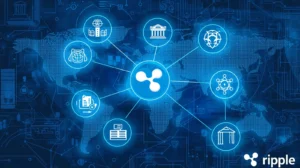
5. Beyond XRP: How Ripple Is Building Global Financial Infrastructure Through Acquisitions
This isn’t the same old Ripple. Over the past two years, the firm has aggressively expanded beyond cross-border remittance and token speculation. Highlights:
-
Acquisition of a global prime broker platform (originally known as Hidden Road), now rebranded as Ripple Prime, giving the firm full access to institutional custody, settlement, and treasury services. Economy+1
-
Expansion into stablecoin infrastructure via their newly launched stablecoin (on XRPL), custody solutions, and treasury-management services. Benzinga+1
-
Processing large volumes of transactions, indicating Ripple is no longer just a crypto company — it aims to be a regulated digital finance infrastructure firm. Benzinga+1
This level of diversification, combined with strong institutional interest, positions Ripple more like a Wall Street-backed fintech firm rather than a speculative crypto project.
6. Implications for XRP and the Crypto Market
A. Institutional Adoption Could Rise
With firms like Citadel and Fortress backing Ripple with institutional-style protections, other institutional investors (banks, funds, ETFs) may feel more comfortable entering the space — serious money could flow into crypto infrastructure, not just speculative tokens.
B. Increased Legitimacy for On-Chain Payments & Stablecoins
Ripple’s stablecoin and payment infrastructure — backed by proven financial institutions — could accelerate adoption of blockchain-based payment rails, stablecoin settlement, and cross-border transactions.
C. XRP’s Role Reinforced (But Complex)
Because much of Ripple’s valuation and this deal is indirectly tied to XRP holdings, XRP remains central. However, this also means volatility in the token can affect the institutional investors’ return — hence the hedging.
D. Shift from Speculation to Infrastructure Narrative
Crypto often cycles between hype and disillusionment. This deal signals a shift: from speculative moonshots to building sustainable infrastructure bridging traditional finance and decentralized assets.
7. Criticisms & Risks: What to Watch Out For
Despite its promise, this move carries several risks and criticisms:
1. Heavy Reliance on XRP Price
Although the deal is structured like credit, Ripple’s core NAV remains tied to XRP. If XRP’s value collapses, the implicit value of this “safe” deal could still suffer — even with protections.
2. Regulatory Overhang
Crypto regulation remains uncertain globally. Institutions backing Ripple may face compliance, regulatory or legal scrutiny — especially in jurisdictions skeptical of stablecoins or crypto assets.
3. Value vs. Speculation Debate
Critics argue that despite infrastructure claims, Ripple’s fundamentals (transaction volume, usage, adoption) may not justify a $40 billion valuation — suggesting the deal could still be more speculative than structural.
4. Unknown Liquidity & Exit Scenarios
Though investors have put options / liquidation preferences, actual exit mechanisms depend heavily on Ripple’s future performance, regulatory environment, and market conditions — none of which are guaranteed.
8. What This Means for the Future of Crypto Finance
This $500 million deal could mark a turning point. If institutions start treating blockchain firms as fintech infrastructure — not speculative tokens — we may see:
-
More institutional funding rounds, with protection structures — safer, more credit-like exposure to crypto.
-
Wider adoption of stablecoins and on-chain settlement by banks and payment providers, reducing reliance on traditional rails like SWIFT.
-
Hybrid models where crypto-native firms adopt traditional finance practices (custody, compliance, risk management) — thereby narrowing the gap between DeFi and TradFi.
-
Potential acceleration of regulatory clarity, as big finance’s involvement could prompt regulators to formalize frameworks for crypto infrastructure. $500 Million Ripple Deal
In other words: this isn’t just a big win for Ripple — it could be a blueprint for how crypto evolves in the next 5–10 years.
9. Conclusion
The $500 million infusion into Ripple by some of Wall Street’s biggest firms is more than a headline — it is a statement.
It says: “We believe in blockchain infrastructure. We’re ready to invest. But we’re not willing to gamble wildly.” By negotiating protections, by focusing on infrastructure over hype, and by backing a diversified strategy, these investors have laid down a cautious but bold marker.
Whether Ripple—and by extension, XRP—will rise to meet those expectations remains to be seen. But this deal has undeniably shifted the conversation: from crypto as speculation to crypto as institutional-grade infrastructure.
For anyone watching the evolution of crypto — traders, investors, developers, regulators — 2025 might well mark the beginning of a new era.
10. Frequently Asked Questions (FAQ)
Q1. Why did Wall Street firms invest in Ripple instead of direct cryptocurrency tokens?
Because Ripple offered a structured deal with downside protections — put options, liquidation preferences, and scheduled returns — which reduces the risk compared to buying volatile tokens directly.
Q2. Does this mean XRP price will soar?
Not necessarily. While the deal boosts institutional confidence, XRP’s price will still depend on adoption, regulatory developments, and market sentiment.
Q3. Is Ripple now safe from crypto volatility?
It is relatively safer for these investors due to the protections embedded in the deal — but risk remains, especially due to Ripple’s heavy reliance on XRP holdings.
Q4. Could more crypto firms get similar Wall Street support?
Yes. If Ripple’s model proves successful — blending crypto infrastructure with traditional finance safeguards — it may pave the way for similar investments in other blockchain firms.
Q5. What should crypto investors take from this?
Look beyond price charts. Institutional backing and infrastructure investments could offer more stable, long-term opportunities than speculative trading.